Big Pharma M&A in 2025: A Shift Toward De-Risked Growth

Big Pharma M&A in 2025: A Shift Toward De-Risked Growth
M&A activity in 2025 reflects a clear strategic pattern across large pharmaceutical companies. Rather than pursuing early discovery or speculative science, acquirers focused on assets that offered late-stage certainty, near-term revenue visibility, or platforms capable of generating multiple follow-on products. Dealmaking concentrated in neuroscience, RNA therapeutics, cardiometabolic disease, respiratory disease, oncology, and metabolic liver disease, all areas aligned with long-term commercial resilience.
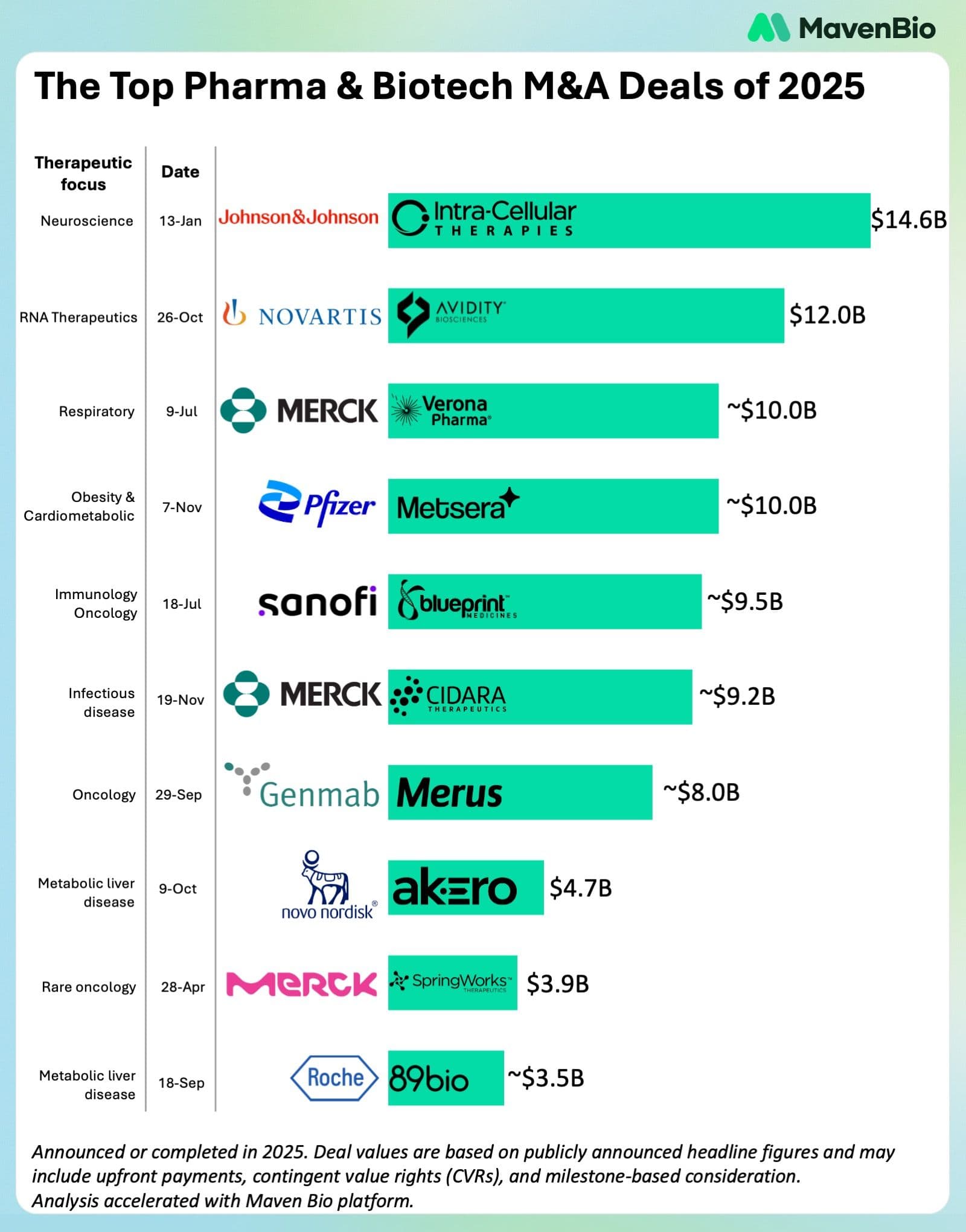
The chart below highlights the most significant announced or completed pharmaceutical and biotechnology acquisitions of 2025, ranked by publicly disclosed headline transaction value.
Neuroscience as a Target for Late-Stage, Patent-Resilient Assets
The largest deal of the year was Johnson and Johnson’s $14.6B acquisition of Intra-Cellular Therapies, marking a decisive recommitment to neuroscience. The transaction centers on Caplyta, a differentiated antipsychotic approved for schizophrenia and bipolar depression, with exclusivity extending into 2040. The deal highlights renewed confidence in CNS franchises that combine durable IP, chronic use, and expanding diagnostic recognition.
RNA Therapeutics as Scalable Platforms for Multi-Indication Expansion
Novartis’ approximately $12B acquisition of Avidity Biosciences underscores growing confidence in RNA-based modalities, particularly antibody-oligonucleotide conjugates. Neuromuscular diseases offer well-defined biology, measurable endpoints, and high unmet need, making them well suited for scalable RNA platforms. The transaction signals a belief that RNA therapeutics are transitioning from experimental tools into repeatable product engines.
Respiratory and Cardiometabolic Assets Address Scarcity in High-Volume Chronic Markets
Merck’s acquisition of Verona Pharma for roughly $10B reflects scarcity value in differentiated respiratory assets. The deal adds a first-in-class COPD therapy at a time when innovation in respiratory disease has lagged other therapeutic areas.
Pfizer’s acquisition of Metsera, following a competitive process that included Novo Nordisk, highlights how aggressively large pharma is repositioning in obesity and cardiometabolic disease. As GLP-1–driven markets expand, adjacent metabolic pathways and combination strategies are increasingly viewed as strategic necessities rather than optional extensions.
Rare Immunology Assets Provide De-Risked Growth Through Specialist Channels
Sanofi’s acquisition of Blueprint Medicines aligns with its broader pivot toward rare disease and immunology. Ayvakit’s established role in systemic mastocytosis, combined with a KIT-focused pipeline, offers specialist-driven revenue streams with lower exposure to broad pricing pressure.
Metabolic Liver Disease as an Obesity-Adjacency Investment Strategy
Metabolic liver disease also emerged as a priority. Novo Nordisk’s purchase of Akero Therapeutics and Roche’s acquisition of 89bio both center on late-stage FGF21-based therapies, reflecting rising conviction in MASH as a long-term commercial opportunity linked to obesity-related comorbidities.
Oncology M&A Focuses on Platform Control and Late-Stage Risk Reduction
In oncology, deal activity favored platform depth and late-stage de-risking. Genmab’s acquisition of Merus strengthens its bispecific antibody capabilities and supports a transition toward a more fully integrated commercial model. Merck KGaA’s acquisition of SpringWorks highlights renewed focus on rare oncology assets with defined regulatory pathways.
Final Perspective
Across therapeutic areas, Big Pharma used M&A in 2025 as a precision instrument rather than a volume strategy. With patent cliffs approaching and development costs continuing to rise, acquisitions increasingly targeted assets that reduce execution risk, extend franchise durability, and align with long-term R&D and commercial priorities. The pattern suggests that future dealmaking will remain selective, concentrated, and closely tied to portfolio resilience rather than headline growth alone.